How Much Protein Do You Really Need? A Practical Guide by Goal
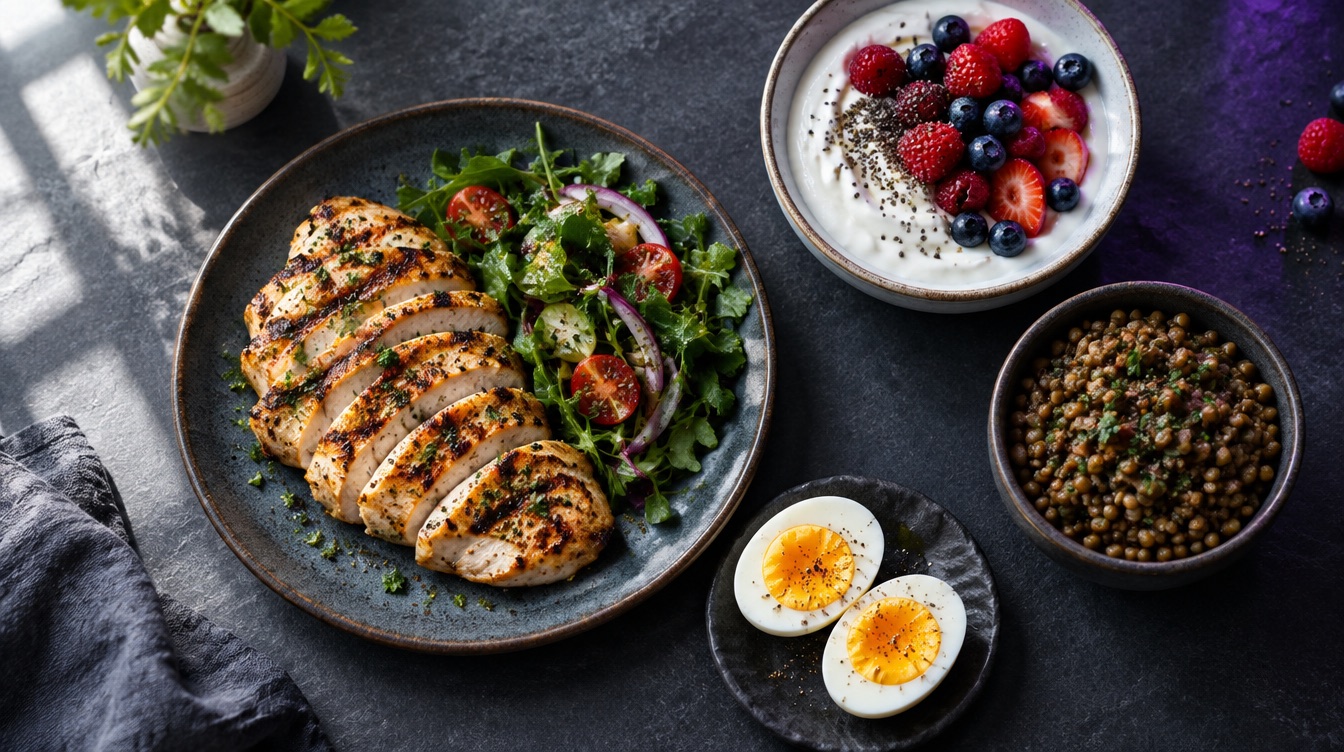
Why protein matters
Protein is made of amino acids, the building blocks your body uses to repair and build muscle, make enzymes and hormones, and maintain skin, hair and immune cells. Unlike carbohydrates and fat, your body does not store extra protein in a dedicated reserve. It is constantly breaking down and rebuilding tissue, and the protein you eat supplies the raw material for that rebuilding.
Protein also helps with appetite. Meals that are higher in protein tend to keep people full for longer, which is one reason higher-protein diets are popular for fat loss. And because digesting protein costs more energy than digesting carbs or fat, a small part of its calories is used up just processing it.
The official minimum is not the optimum
The widely quoted Recommended Dietary Allowance is 0.8 grams of protein per kilogram of body weight per day. For a 75 kg adult, that is 60 grams. It is important to understand what that number means: it is the amount that prevents deficiency in nearly all healthy, mostly sedentary adults. It was never designed as a target for people who lift weights, run, or want to change their body composition.
For active people, research points higher. A large 2018 meta-analysis of resistance-training studies found that the benefit of protein for muscle gain levelled off at around 1.6 g/kg per day, with some people stillbenefiting up to about 2.2 g/kg. That range is where most evidence-based coaches set their clients today.
How much protein for your goal
- General health, not training much: 0.8–1.2 g/kg. More is fine, but not necessary.
- Building muscle: 1.6–2.2 g/kg. Start at 1.6 and go higher if it is easy for you to eat.
- Losing fat while keeping muscle: 1.8–2.4 g/kg. When you eat less, protein becomes more important for holding on to muscle.
- Endurance athletes: 1.2–1.6 g/kg, with more during heavy training blocks.
- Adults over 60: at least 1.2 g/kg, because muscle responds less strongly to protein with age.
If you carry a lot of body fat, calculating protein from your total weight can give a number that is unrealistically high. In that case, use your goal weight or your height-based healthy weight instead.
A quick example
Anna weighs 65 kg, trains with weights three times a week and wants to lose some fat. At 2.0 g/kg, her target is 130 grams of protein a day. Split over three meals and a snack, that is roughly 35 grams per meal and 25 grams in the snack, which is very achievable with normal food.
You can get your own number in a few seconds with our free protein calculator.
Does timing matter?
Total daily protein matters far more than timing. That said, spreading it out does help. Muscle protein synthesis responds best to meals that contain roughly 0.3–0.4 g/kg of protein, which works out to about 20–40 grams for most people. Eating three or four protein-containing meals is more effective than eating almost nothing all day and a huge steak at dinner.
The famous "anabolic window", the idea that you must drink a shake within 30 minutes of training, is mostly a myth. If you had a meal with protein a few hours before your workout, you are covered. If you trained fasted early in the morning, eating protein soon afterwards is a good idea.
Best sources of protein
Here is roughly how much protein you get from common foods:
- Chicken breast, 100 g cooked: about 31 g
- Canned tuna, 100 g drained: about 25 g
- Greek yogurt (plain, 0–2% fat), 200 g: about 18–20 g
- Cottage cheese, 200 g: about 22–24 g
- Eggs, 2 large: about 12–13 g
- Firm tofu, 150 g: about 18–20 g
- Cooked lentils, 200 g: about 18 g
- Whey protein, one 30 g scoop: about 22–25 g
Animal proteins contain all the essential amino acids in good proportions and are rich in leucine, the amino acid that most strongly switches on muscle building. Plant proteins work very well too, but it helps to eat a mix of sources (for example beans plus grains) and aim for the top of your range, because plant proteins are slightly less digestible on average.
Is a high-protein diet safe?
For healthy adults, intakes up to around 2.2 g/kg have been studied extensively and are considered safe. There is no good evidence that high protein damages healthy kidneys or bones. The exception is people who already have kidney disease. If that applies to you, talk to your doctor before increasing protein.
The more practical risk is simply crowding out other foods. If protein pushes vegetables, fruit and fibre off your plate, your diet as a whole gets worse. Build your meals around a protein source, but keep the rest of the plate colourful.
Do you need protein powder?
No. Protein powder is just food in a convenient form. It is useful if you struggle to hit your target, travel a lot or want a quick snack, but it does nothing that chicken, fish, dairy, eggs, tofu or legumes cannot do. If you use it, choose a product that is third-party tested, because supplements are not regulated as strictly as food.
Practical tips to hit your target
- Start every meal with the question "where is the protein?" and build from there.
- Swap regular yogurt for Greek yogurt or skyr. It has roughly twice the protein.
- Keep easy options ready: boiled eggs, canned fish, cooked chicken, cottage cheese.
- Add beans or lentils to soups, salads and pasta sauces.
- Track for a week. Most people overestimate how much protein they eat until they see the numbers.
The bottom line
If you are active and want to build or keep muscle, aim for about 1.6–2.2 grams of protein per kilogram of body weight per day, spread across three or four meals. You do not need special timing or expensive supplements, just a consistent habit of putting a good protein source on your plate. Logging your meals for a while is the easiest way to see whether you are really getting there.
This article is general information, not medical advice. If you have a health condition, talk to a doctor or registered dietitian before changing your diet.