Why the Scale Lies: Understanding Daily Weight Fluctuations
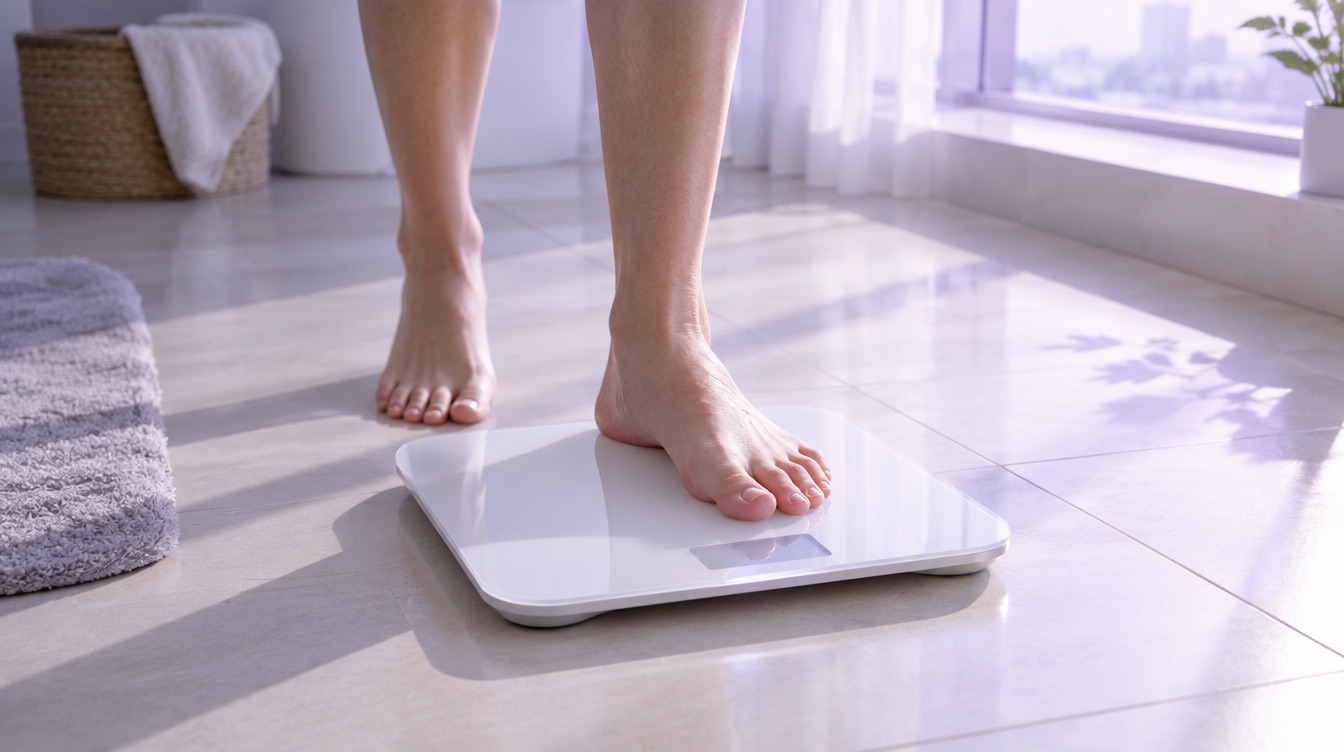
You ate well all week, hit your calorie target and trained hard. Then you step on the scale and you are a kilogram heavier than yesterday. It is frustrating, and for many people it is the moment they give up. But that number almost certainly does not mean you gained a kilogram of fat. Daily weight is a noisy signal, and once you understand what drives the noise, the scale becomes a useful tool instead of a source of stress.
Your weight is more than fat
When you step on a scale, it measures everything: muscle, fat, bone, organs, the food in your gut and, most importantly, water. Water makes up roughly 50–60% of your body weight, and the amount you carry can easily shift by one to two kilograms from one day to the next. Fat changes slowly. Water changes quickly. So short-term swings are almost always water.
Common reasons your weight jumps
1. Salt
A salty meal, like takeaway, pizza or restaurant food, makes your body hold extra water to keep sodium levels in balance. A jump of 0.5–1.5 kg the next morning is common. It usually fades within two or three days.
2. Carbohydrates and glycogen
Your muscles and liver store carbohydrate as glycogen, and each gram of glycogen is stored together with about three grams of water. After a high-carb day, your weight can rise quickly. This is also why low-carb diets cause a big drop in the first week: much of it is glycogen and water, not fat.
3. Food still in your gut
The food you ate yesterday has physical weight until it is digested and eliminated. A big, high-fibre dinner can show up on the scale the next morning.
4. Training
A hard workout, especially one that makes you sore or involves new exercises, causes muscle inflammation and fluid retention while your muscles repair. Starting a new program often brings a temporary weight increase for a week or two.
5. The menstrual cycle
Hormonal changes cause many women to retain water in the days before their period, often 1–2 kg or more, which drops again once the period starts. Comparing weight to the same phase of the previous cycle gives a fairer picture.
6. Stress and poor sleep
High stress and short sleep raise cortisol, which can increase water retention. A rough week can hide fat loss that is actually happening.
7. Hydration and the time of day
Your weight is usually lowest in the morning and highest in the evening, after a day of eating and drinking. Weighing at random times guarantees random results.
How to weigh yourself properly
- Same conditions every time: first thing in the morning, after using the bathroom, before eating or drinking, in minimal clothing.
- Same scale, on a hard, flat surface.
- Weigh often, react rarely. Daily weighing is fine and gives more data. The key is not to react to any single day.
Use the trend, not the day
The best way to read your weight is with an average. A 7-day moving average smooths out the daily noise and shows the real direction:
- Add up your last seven morning weights and divide by seven.
- Compare this week's average to last week's.
Even if individual days jump around by a kilogram, the weekly average will move slowly and steadily if your calories are on target. That steady line is what tells you whether you are losing, maintaining or gaining.
Example: your weights for the week are 80.4, 79.8, 80.9, 80.1, 79.6, 80.3 and 79.7. Day to day, it looks chaotic. The average is 80.1 kg. If last week's average was 80.6 kg, you lost about half a kilogram, which is exactly the trend you want during a fat-loss phase.
When to actually adjust your diet
Give any change at least two to three weeks before deciding it is not working. If your weekly average has not moved in the expected direction over that time, and you have been consistent, then it makes sense to adjust your calories by around 100–200 kcal per day.
Avoid making changes based on a single weigh-in. Cutting calories because of one heavy morning, usually just salt or carbs, often leads to under-eating, frustration and rebound.
Other ways to measure progress
The scale cannot tell fat from muscle or water. Especially if you are lifting weights, combine it with other measures:
- Waist measurement: measure around your navel once a week, at the same time of day.
- Progress photos: same lighting, same pose, every two to four weeks.
- How your clothes fit.
- Strength in the gym: getting stronger during a diet is a strong sign you are keeping or building muscle.
If your waist is shrinking and your lifts are going up, you are making progress, even when the scale is stubborn.
The bottom line
Daily weight fluctuates because of water, salt, carbs, food in your gut, training, hormones and sleep. Fat loss is slow and steady and only shows up clearly in the trend. Weigh under the same conditions, look at your weekly average, give changes a few weeks and use other measures alongside the scale. Your weight on any one morning is just a data point, not a verdict.
This article is general information, not medical advice. Sudden, unexplained weight changes or swelling should be checked by a doctor.