How Much Water Should You Drink? Beyond the 8 Glasses Myth
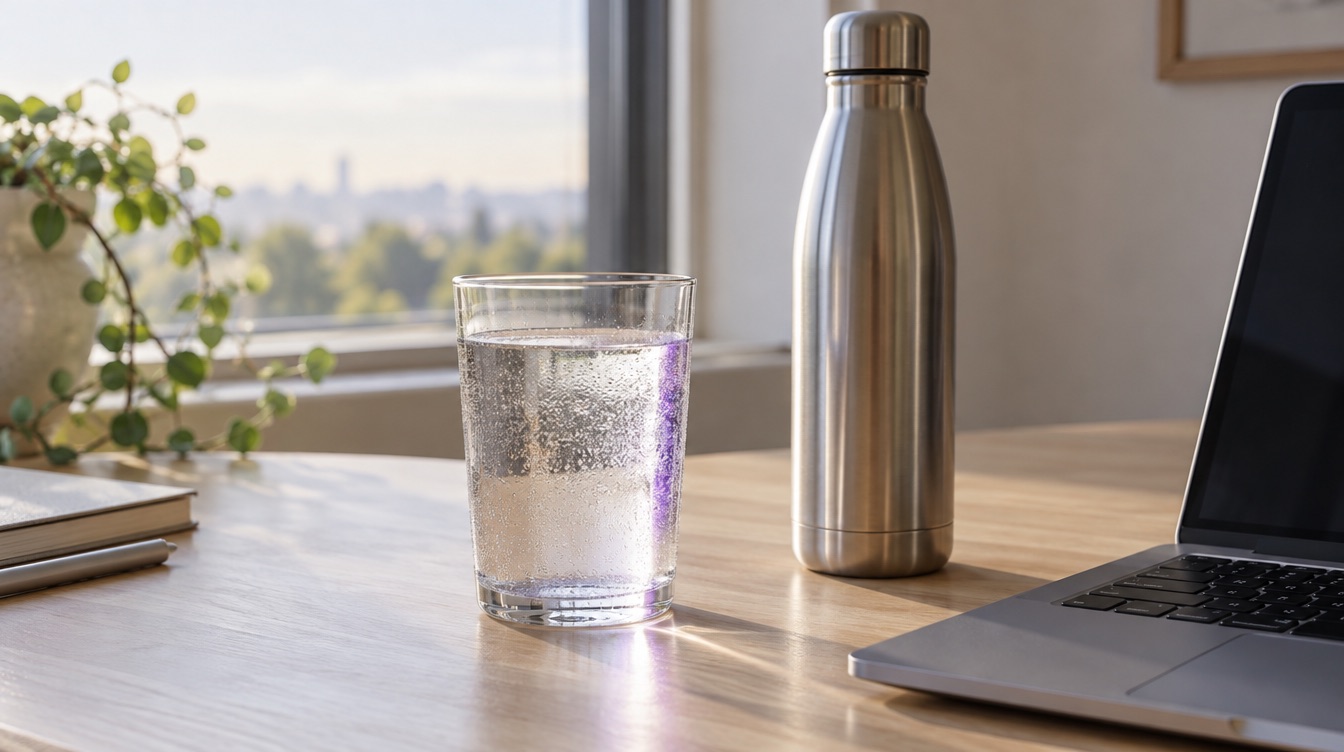
"Drink eight glasses of water a day" is one of the most repeated pieces of health advice in the world. It is easy to remember, but it is not based on solid science, and it does not fit everyone. A small office worker in a cool climate and a construction worker in a summer heatwave have very different needs. So how much water do you actually need, and how can you tell whether you are getting enough?
Where water comes from
Your body gets water from three places:
- Drinks: water, but also tea, coffee, milk, juice and other beverages.
- Food: fruit, vegetables, soups, yogurt and cooked grains contain a lot of water. On a typical diet, food provides roughly 20% of total water intake.
- Metabolism: a small amount of water is produced when your body breaks down food.
So the "8 glasses" do not have to come only from plain water. And yes, coffee and tea count. Caffeine has a mild diuretic effect, but in people who drink them regularly, these drinks still contribute to hydration overall.
Official recommendations
Health authorities give "adequate intake" values for total water from all sources (food and drinks):
- European Food Safety Authority: about 2.0 litres per day for women and 2.5 litres for men.
- US National Academies: about 2.7 litres for women and 3.7 litres for men.
Since about a fifth of this comes from food, that translates to roughly 1.6–3 litres from drinks for most adults. These are averages for healthy people in mild conditions, not strict targets.
A simple rule of thumb many people use is about 30–35 ml per kilogram of body weight per day as a starting point. For a 70 kg person, that is about 2.1–2.5 litres in total. Our water intake calculator adds adjustments for exercise and climate.
What increases your needs
- Exercise: you can lose anywhere from 0.5 to over 2 litres of sweat per hour of exercise, depending on intensity, temperature and your own sweat rate.
- Heat and humidity: hot weather increases sweating even at rest.
- Altitude: you lose more water through breathing at high altitude.
- Illness: fever, vomiting and diarrhoea cause significant fluid loss.
- Pregnancy and breastfeeding: both increase water needs.
- High-protein or high-fibre diets: both work better with enough fluid.
How to tell if you are drinking enough
For healthy people, thirst is a pretty good guide in everyday life. Two other easy checks:
- Urine colour: pale yellow, like lemonade, is a good sign. Dark yellow or amber suggests you need more fluid. (Note: some vitamins, especially B vitamins, can make urine bright yellow regardless.)
- Frequency: most well-hydrated people urinate every few hours during the day.
Signs of mild dehydration include thirst, headache, tiredness, difficulty concentrating and dark urine. Even a small loss of body water, around 2% of body weight, can reduce exercise performance, particularly in the heat.
Hydration and exercise
For most workouts under an hour in normal conditions, drinking water when you are thirsty and having a drink afterwards is enough. For longer or hotter sessions, a bit more planning helps:
- Before: drink a glass or two of water in the couple of hours before training.
- During: sip regularly. Many athletes aim for roughly 0.4–0.8 litres per hour, adjusted to how much they sweat.
- After: a useful trick is to weigh yourself before and after a session. Each kilogram lost is about one litre of fluid. Drinking around 1.25–1.5 litres per kilogram lost over the following hours restores your balance.
For long sessions in the heat, plain water alone may not be enough, because you also lose sodium in sweat. We cover this in our article on electrolytes.
Can you drink too much?
Yes. Drinking very large amounts of plain water in a short time, especially during long endurance events, can dilute the sodium in your blood. This condition, called hyponatraemia, can be dangerous. It is rare in everyday life, but it is one reason why "more is always better" is wrong. Drink to thirst, replace what you lose, and do not force down litres of water you do not need.
Tips to drink more if you struggle
- Keep a reusable bottle on your desk or in your bag. If it is visible, you will drink more.
- Have a glass of water with every meal.
- Flavour water with lemon, cucumber, mint or berries.
- Eat more water-rich foods such as cucumber, watermelon, oranges, tomatoes and soups.
- Log your intake for a few days to see your real pattern.
The bottom line
There is no magic number, but most adults need roughly 2–3 litres of total water per day, more when they exercise, sweat or are in hot weather. Food counts, coffee and tea count, and your thirst and urine colour are reliable everyday guides. Drink enough, not excessively.
This article is general information, not medical advice. People with heart, kidney or other medical conditions may have specific fluid limits from their doctor.