How to Count Calories Without Losing Your Mind
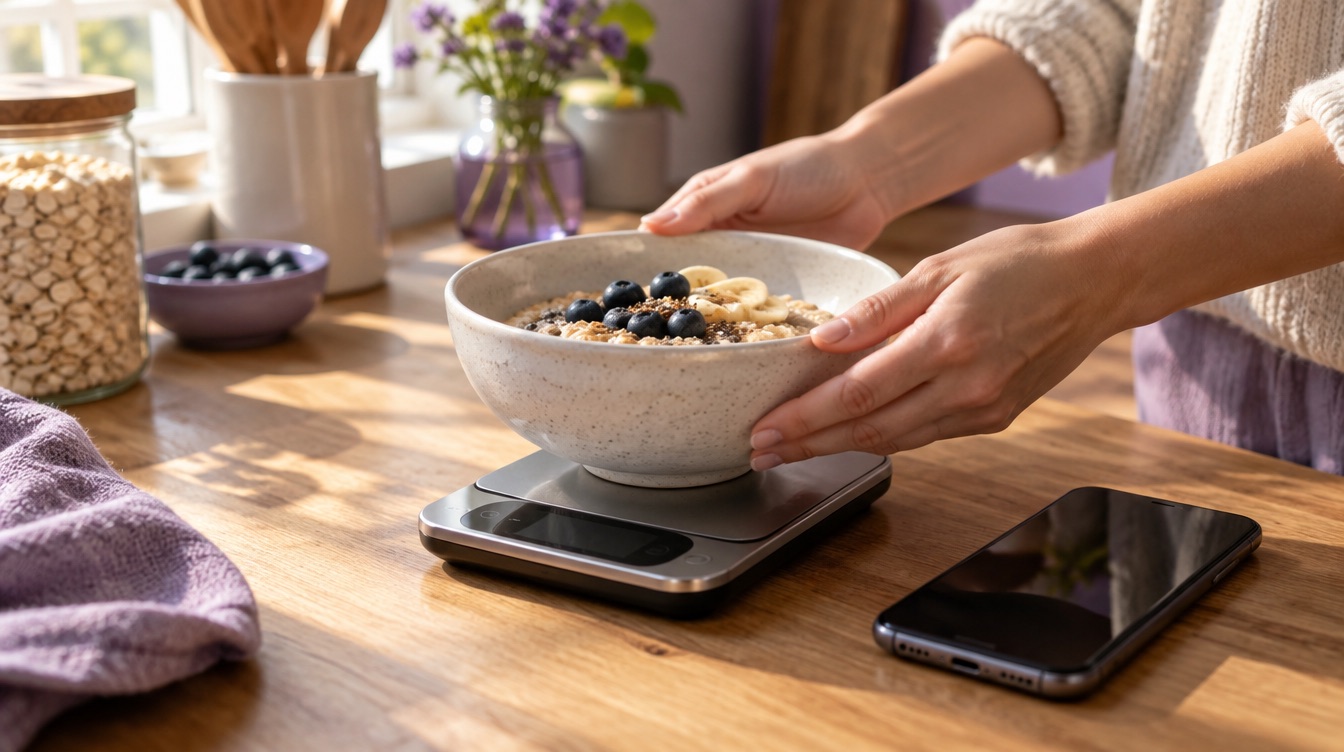
Counting calories has a bad reputation. People imagine weighing every lettuce leaf, refusing dinner invitations and feeling guilty about a slice of birthday cake. Done that way, it is exhausting and almost nobody sticks with it. Done sensibly, though, calorie counting is one of the most useful skills you can learn about food. It teaches you what portions really look like and where your energy comes from, and it gives you real control over your weight. Here is how to do it without letting it take over your life.
Why calories matter
Your body weight over time is mostly the result of energy balance: the energy you eat versus the energy you use. Eat more than you burn and the extra is stored, eat less and your body draws on its stores. That is not the whole story, because hormones, sleep, stress and food quality all affect hunger and how you feel, but energy balance is the foundation. Every successful diet, whether it is low-carb, intermittent fasting or plant-based, works mainly by helping people eat fewer calories.
Counting simply makes that balance visible. Instead of guessing, you know.
Step 1: Know your number
Start by estimating how many calories you burn in a day, your total daily energy expenditure (TDEE). It depends on your size, age, sex and how active you are. Our free calorie calculator gives you a good starting estimate.
Then set a target based on your goal:
- Lose fat: eat about 300–500 kcal below your TDEE. For most people this means losing roughly 0.5% of body weight per week, which is sustainable and preserves muscle.
- Maintain: eat around your TDEE.
- Build muscle: eat about 200–300 kcal above your TDEE, with plenty of protein and a good training plan.
Treat this number as a first guess. After two or three weeks, look at what your weight trend is actually doing and adjust by 100–200 kcal if needed.
Step 2: Log first, change later
For the first week, do not try to diet. Just log what you normally eat, honestly. This gives you a baseline and almost always produces a few surprises: the cooking oil that adds 250 kcal to a stir-fry, the "small" handful of nuts that is actually 300 kcal, the latte that is a meal in disguise.
Once you see your patterns, you can make targeted changes instead of cutting everything at random.
Step 3: Get your portions right
The biggest source of error in calorie counting is not the app or the database, it is portion size. People routinely underestimate how much they eat by 20–40%, especially with calorie-dense foods.
- Use a kitchen scale for a few weeks. It is the fastest way to calibrate your eye. Weigh pasta, rice, cereal, nuts, cheese, oils and spreads, because these are the foods where small mistakes cost the most.
- Weigh raw when possible. Cooking changes the weight of food (rice and pasta absorb water, meat loses it). Make sure the database entry you choose matches raw or cooked.
- Measure oils and sauces. One tablespoon of olive oil is about 120 kcal. Pouring straight from the bottle can easily add three.
- Do not obsess over vegetables. A few grams of cucumber will not change anything. Spend your attention on the energy-dense foods.
Step 4: Make logging fast
The method that works is the one you will still be doing in a month. A few ways to make logging take less than five minutes a day:
- Scan barcodes for packaged foods instead of searching.
- Save your regular meals. Most people eat the same breakfasts and lunches on repeat. Save them once and log them in one tap.
- Log as you go, not at the end of the day when you have forgotten half of it.
- Use photo estimates for restaurant meals. A reasonable estimate is far better than skipping the entry.
Step 5: Aim for consistency, not perfection
You do not need to be accurate to the calorie. Food labels themselves are allowed to be off by a margin, and your body is not a lab instrument. What matters is that your logging is roughly right and consistent from day to day. If you are 10% off but always 10% off, your weight trend will still tell you whether to eat more or less.
Likewise, one high day does not ruin anything. Think in weeks, not days. If you go 600 kcal over at a party on Saturday, your week's average barely moves.
Common mistakes
- Forgetting drinks. Juice, soda, alcohol, smoothies and fancy coffees add up quickly. Alcohol alone has 7 kcal per gram.
- Not logging "bites and tastes". Finishing the kids' leftovers or tasting while cooking can be a few hundred calories.
- Cutting too hard. A huge deficit makes you hungry, tired and likely to give up. It also costs muscle.
- Judging progress by one weigh-in. Your weight can swing 1–2 kg day to day because of water and salt. Watch the weekly average.
- Ignoring food quality. 1,800 kcal of mostly protein, vegetables, fruit and whole grains feels completely different from 1,800 kcal of snacks.
Do you have to count forever?
No. Many people count carefully for a few months, learn what their portions and favourite meals look like, and then switch to a looser approach: logging occasionally, checking in when their weight drifts, or tracking only protein. Calorie counting is a tool for learning, not a life sentence.
If counting ever starts to make you anxious or affects your relationship with food, it is perfectly fine to stop and use other approaches, such as structured meals or hunger cues. And if you have a history of disordered eating, talk to a professional before tracking.
The bottom line
Calorie counting works because it turns guesswork into information. Estimate your needs, log honestly for a week, weigh the calorie-dense foods, make logging quick and judge your progress over weeks rather than days. Done that way, it takes a few minutes a day and gives you a level of control that no diet trick can match.
This article is general information, not medical advice.